
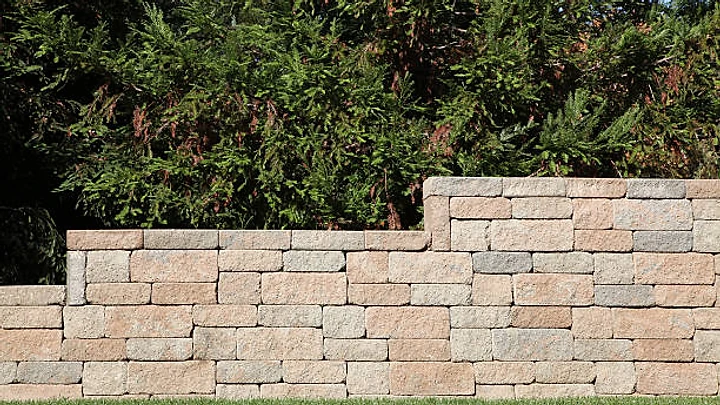
Typical retaining wall costs by material
Retaining wall pricing is usually quoted per linear foot rather than a flat rate, since cost scales with how much wall you actually need. As a general market guide for the DFW area:
| Wall material | Typical cost per linear foot |
|---|---|
| Standard concrete block (segmental), under 4 ft | $25 – $50 |
| Brick veneer | $50 – $100+ |
| Natural stone or premium engineered systems | $100 – $150+ |
What a retaining wall costs by height
A rough sense of total project cost on a standard 10-foot run of wall:
Taller walls cost more per foot as well as in total — they need more material and excavation, and past about 4 feet they almost always need engineering review. Real numbers vary with site access, soil conditions, and material choice, which is why we quote every wall after seeing the site.
| Wall height | Typical cost, 10-ft run |
|---|---|
| 2 feet tall | $700 – $1,300 |
| 4 feet tall | $1,400 – $2,600 |
| 6 feet tall | $2,100 – $3,900 |
Why drainage costs more here than the national average
North Texas sits on expansive clay soil with some of the highest shrink-swell potential in the country — it expands when wet and contracts when dry, which puts real pressure on a wall that isn't draining properly. Skipping drainage is one of the most common reasons a retaining wall bulges, leans, or fails within a few years instead of lasting decades.
A proper drainage system (gravel backfill, a perforated drain line, and a way to route water away from the wall) typically adds somewhere in the range of $10–$25 per linear foot. On DFW soil, we treat this as a required part of the build, not an optional upgrade — it's the difference between a wall that holds up through a normal wet spring and one that doesn't.
When engineering and permits come into play
Walls taller than about 4 feet typically need a structural engineer's stamped design to meet code and hold up safely over time — engineering review usually runs $500–$2,000+ depending on wall height and site complexity. Permits and inspections add another cost on top of that (commonly a few hundred dollars locally), and site conditions like slope, soil, and access can add further site-prep costs. Shorter walls under 4 feet usually don't require engineering, which is part of why they cost noticeably less per foot.
Getting an accurate estimate for your project
Because height, length, material, drainage needs, and site access all move the price independently, the ranges above are a starting point for research — not a quote. The only way to get an accurate number for your yard is a site evaluation, where we look at the slope, soil, drainage path, and access before pricing the wall. We build every retaining wall with proper drainage as standard, given how DFW clay behaves.