
Start with what the edge needs to do
If the main problem is grass creeping into a bed, the edge needs to create a clear separation that is easy to maintain. If the bed sits beside a driveway or walkway, a firmer border can help keep loose rock from spreading onto the hard surface. A raised bed may need a more substantial stone or block edge than a simple planting bed.
Before choosing a material, look at the whole line of the bed. A long, straight border has different needs from a curved bed that wraps around a tree or follows a walkway.
Metal edging for a low-profile finish
Metal edging is a good option when you want the planting or ground-cover material to stand out rather than the border itself. It works well for clean lines and curves, and it takes up little visual space. The installation still matters: the edge needs to be set at a consistent height and secured so it does not lean or leave gaps.
Stone or block when the border is part of the design
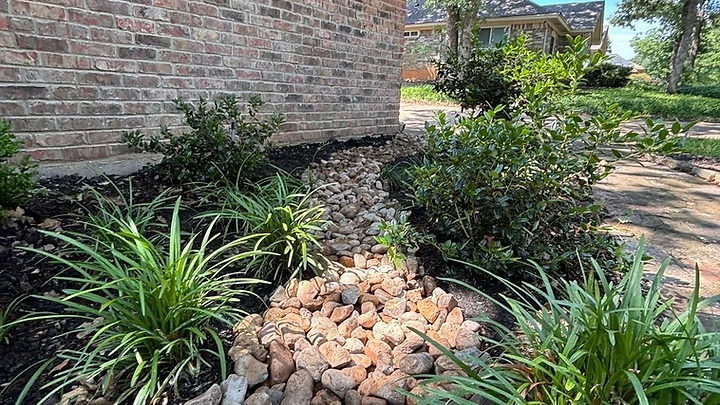
Stone and block edging are more visible, so they can become part of the look of the bed. They pair well with brick homes, raised beds, and landscapes that already use stone. They also take more planning than a thin divider because the top line, corners, and transitions are always on display.
If the border is retaining soil or creating a raised bed, it should be designed for that job rather than treated as decoration. The amount of soil pressure and any drainage needs matter.
Plastic or composite edging for simple separations
Plastic and composite products can work for straightforward bed edges and are often less noticeable than stone. Product quality and how well the edging is anchored make a difference. For beds with heavy rock, sharp curves, or a lot of mower traffic, choose a product that is suited to those conditions instead of buying on price alone.
A few North Texas details to consider
Clay soil can expand and shrink as moisture changes, and heavy rain can move loose mulch or soil downhill. An edging strip will not solve a drainage problem by itself. If water keeps washing material out of a bed, the layout, slope, downspout discharge, and ground cover may need attention as well.
For a new installation, decide on edging before ordering the mulch or rock. It is easier to get a neat finish when the bed shape, border height, liner if needed, and ground-cover depth are planned together.
What we would decide before installing it
Measure the bed, note where it meets turf or pavement, decide whether the border should disappear or stand out, and check how water moves through the area after rain. Those answers narrow the material choice quickly. The Landscaper Crew installs landscape borders and flower beds in Arlington, Mansfield, Kennedale, and Pantego; a site-specific quote can account for the shape and conditions of your yard.